You Won’t Believe What I Found at Arusha’s Hidden Cultural Heart
Arusha isn’t just a gateway to safaris—it’s a living canvas of culture. I went looking for adventure and stumbled upon something deeper: real people, rhythmic dances, and traditions that pulse through the streets. This is more than tourism; it’s connection. If you’ve ever wanted to feel, not just see, a place, let me show you the Arusha only locals talk about. Beyond the well-trodden paths to Mount Kilimanjaro and the Serengeti lies a city humming with stories, colors, and rhythms that few travelers take time to truly hear. It’s in the early morning call to prayer blending with Swahili greetings at the market, in the laughter of children dancing between stalls, and in the quiet pride of artisans shaping wood into ancestral symbols. This is not a performance for tourists—it’s daily life, rich and resonant. And once you listen closely, Arusha changes what you thought travel was supposed to be.
Why Arusha Deserves More Than a Layover
For years, Arusha has been known primarily as a launchpad. Travelers fly in, spend a night or two at a hotel near the airport, and then head off to the national parks. It’s treated as a logistical necessity rather than a destination in its own right. Brochures highlight the city’s proximity to wildlife, its clean streets, and reliable tour operators, but rarely do they mention the heartbeat beneath the surface. Yet, to pass through Arusha without pausing is to miss one of East Africa’s most vibrant cultural crossroads. This city, nestled between Mount Meru and the Great Rift Valley, has long served as a meeting point for diverse communities—Maasai herders, Meru farmers, Chaga traders, and urban Tanzanians shaping a modern identity rooted in tradition.
What changed my perspective was a simple decision: instead of booking a safari vehicle on arrival, I stayed for five days with a local host family in the Ngarenanyuki neighborhood. There, removed from the tourist circuit, I began to notice the rhythms that define Arusha’s soul. At dawn, women balanced baskets of vegetables on their heads, walking to the Central Market. Men gathered at tea stands, sipping from small glasses while discussing the day’s news. Children recited Swahili poetry on their way to school. These were not curated experiences; they were ordinary moments, yet each carried deep cultural meaning. I realized that Arusha doesn’t need to be exoticized to be extraordinary. Its beauty lies in authenticity, in the way people live with intention and community.
The shift from viewing Arusha as a stopover to seeing it as a cultural destination begins with mindset. It requires slowing down, asking questions, and being open to unplanned encounters. Many visitors expect culture to appear in designated spaces—museums, cultural centers, or evening shows. But in Arusha, culture is not confined. It spills into the streets, into homes, into shared meals. By choosing to linger, travelers gain access to a version of Tanzania that postcards don’t capture. They learn that a city can be both modern and deeply traditional, both fast-paced and profoundly grounded. Arusha challenges the assumption that adventure must mean wilderness. Sometimes, the greatest discovery is the complexity of human connection in an urban setting where heritage is lived, not displayed.
This redefinition of Arusha’s value also supports sustainable tourism. When travelers spend time and money in local neighborhoods, they contribute directly to community well-being. Staying in family-run guesthouses, eating at neighborhood restaurants, and buying crafts from street vendors circulates income where it’s most needed. It fosters mutual respect and breaks down the divide between “visitor” and “local.” In this way, extending a layover into a meaningful stay becomes not just enriching for the traveler, but impactful for the host. Arusha deserves more than a layover because its people deserve recognition—not just as guides or service providers, but as storytellers, artists, and keepers of a living culture that continues to evolve.
The Pulse of Local Life: Markets, Music, and Meaning
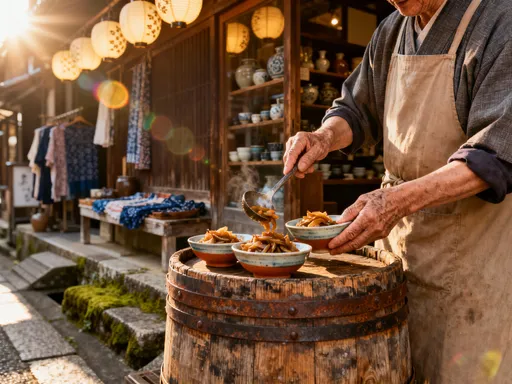
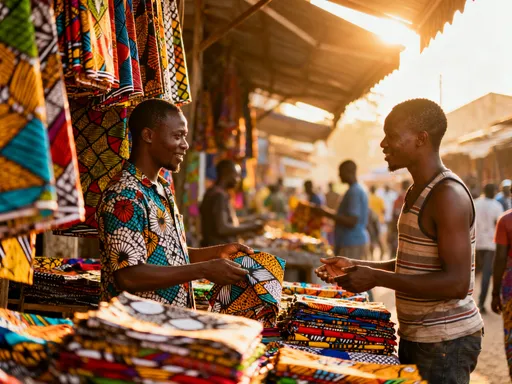
No place reveals the soul of Arusha more vividly than its markets. The Central Market, located in the heart of the city, is a sensory explosion—colors, scents, sounds, and movement blend into a living mosaic. Rows of stalls overflow with pyramids of ripe mangoes, bundles of fragrant spices, and baskets of freshly harvested greens. Vendors call out prices in Swahili and Maa, their voices rising above the clatter of motorbikes and the occasional moo of a passing cow. The air carries the earthy scent of raw coffee, the sweetness of overripe bananas, and the sharp tang of drying fish. This is not a sanitized shopping experience; it’s a dynamic, breathing ecosystem where commerce and community intertwine.
What makes the market more than just a place to buy goods is the way it functions as a social hub. Women haggle over the price of kitenge fabric while sharing news about their families. Elders sit on low stools, sipping chai and offering advice to younger vendors. Children dart between stalls, helping pack purchases or simply observing the flow of daily life. These interactions are not incidental—they reflect core values of mutual support, respect for elders, and collective responsibility. In a world increasingly dominated by digital transactions and impersonal exchanges, Arusha’s markets offer a reminder of how commerce can be deeply human.
Music, too, plays a vital role in the city’s rhythm. On any given afternoon, the sound of live drumming might drift from a community center or a schoolyard. Young men practice traditional dances, their feet pounding the dirt in precise patterns. Women sing call-and-response songs while preparing food or washing clothes. These moments are not staged for tourists; they are expressions of identity and continuity. Oral storytelling often accompanies the music—elders recounting myths, historical events, or moral lessons through proverbs and parables. This living tradition ensures that knowledge is passed down not through textbooks, but through sound, movement, and memory.
The authenticity of these experiences lies in their spontaneity. Unlike tourist-oriented performances, which follow a fixed script, the music and stories of Arusha unfold naturally, shaped by the moment and the people present. To witness them requires patience and presence. A traveler might need to sit quietly for a while, to accept a cup of tea, to listen more than speak. But in doing so, they gain something rare: access to unscripted culture. There is no admission fee, no scheduled start time—only the invitation to be part of something real. In these moments, the boundary between observer and participant begins to blur, and the true pulse of Arusha becomes unmistakable.
Inside the Dance: Experiencing Maasai and Meru Traditions Firsthand
One of the most powerful cultural experiences in Arusha is witnessing traditional dance performed not for spectacle, but as an act of heritage. During my stay, I was invited to attend a community gathering in the outskirts of the city, where members of the Maasai and Meru communities came together to celebrate a coming-of-age ceremony. Unlike commercialized cultural shows, this event was intimate, respectful, and deeply meaningful. There were no bleachers, no loudspeakers, no souvenir stalls. Instead, families sat on woven mats under acacia trees, children nestled between grandparents, as the rhythm of the olaranyani drum began to build.
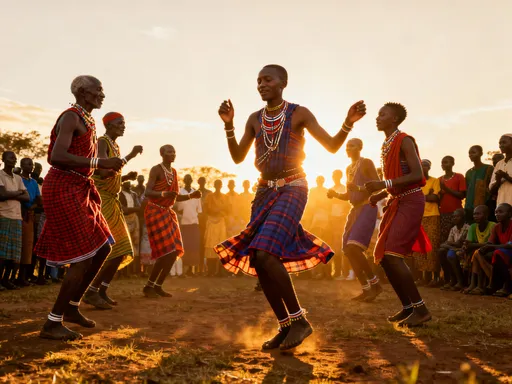
The Maasai warriors entered first, their red shukas flaring in the wind, beads clicking with each step. Their bodies were painted with ochre and white clay, symbols of strength and transition. The famous adumu, or jumping dance, began slowly, then intensified as the men leaped higher and higher, maintaining perfect posture. Their singing—deep, guttural, and harmonized—rose in volume, creating a trance-like energy. For the Maasai, this dance is not entertainment; it is a demonstration of endurance, courage, and unity. Each jump carries spiritual significance, connecting the dancers to their ancestors and affirming their role within the community.
Later, the Meru women took their turn, performing a harvest dance that celebrated fertility and gratitude. Dressed in colorful cotton wraps and beaded necklaces, they moved in synchronized circles, their voices blending in a melodic chant. The dance told a story—of planting, growth, and abundance—and invited the audience to feel the joy of a successful season. What struck me most was the sense of inclusion. While certain parts of the ceremony were reserved for initiates, the overall atmosphere was welcoming. An elder noticed my fascination and gestured for me to sit closer. When the rhythm shifted, a young girl took my hand and showed me a simple step. I didn’t master it, but my attempt was met with laughter and encouragement, not judgment.
Respectful participation is key in such settings. Observing quietly during sacred moments, dressing modestly, and following the lead of hosts are essential. Photography should only be done with permission, and flashes avoided. These traditions are not performances; they are living practices that carry deep emotional and spiritual weight. By approaching them with humility, travelers honor the culture rather than reduce it to a photo opportunity. The experience left me with a profound understanding: dance in Arusha is not just movement—it is language, memory, and identity expressed through the body. To witness it is to be reminded that culture is not static; it breathes, evolves, and invites connection when approached with care.
Art That Speaks: Discovering Arusha’s Creative Soul
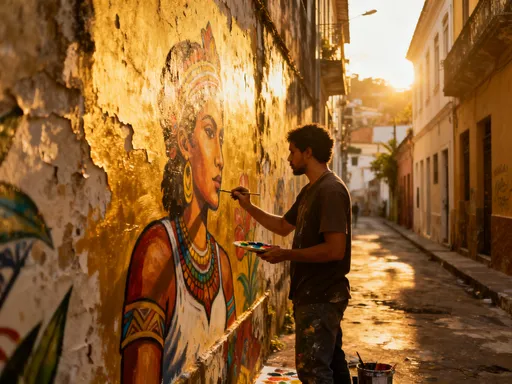
Beyond the markets and ceremonies, Arusha’s creative spirit thrives in its art studios and galleries. A short walk from the city center, I visited a collective of local artists working in a converted warehouse space. The walls were alive with color—large Tingatinga paintings depicting wildlife, village scenes, and mythological figures in bold outlines and vivid hues. On wooden shelves, intricately carved masks and figurines stood alongside sculptures made from recycled materials: bicycle chains shaped into birds, bottle caps welded into abstract forms, old typewriter keys strung into necklaces. This was art born of both tradition and innovation, where ancestral motifs met contemporary expression.
Tingatinga painting, named after its founder Edward Saidi Tingatinga, originated in Tanzania in the 1960s and has since become a celebrated national art form. What began as a way for artists to sell small, affordable pieces to tourists has evolved into a sophisticated movement. In Arusha, many young painters are reinterpreting the style, blending its characteristic flat perspective and decorative patterns with modern themes—urban life, environmental awareness, women’s roles in society. One artist, Amina Mwakalinga, explained that her work often features strong female figures in traditional dress, not as relics of the past, but as symbols of resilience and leadership. “Our culture is not frozen,” she said. “It moves with us.”
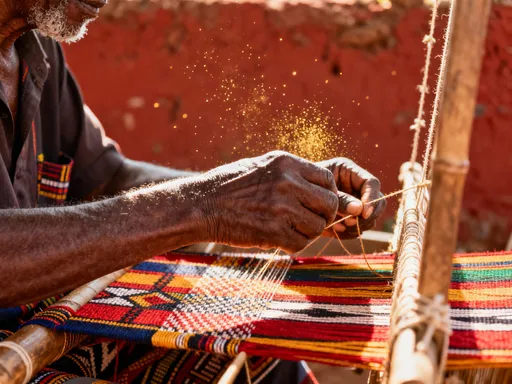
Wood carving is another vital art form, especially among the Chaga and Meru communities. I watched an elder craftsman named Paulo Mwinyi work on a ceremonial mask, his hands moving with precision over a block of ebony. He explained that each feature—the shape of the eyes, the curve of the mouth—carries symbolic meaning, often tied to ancestral spirits or natural forces. These carvings are not made for decoration alone; they are used in rituals, passed down through generations, and treated with reverence. Yet, many artisans now create smaller, portable versions for visitors, ensuring that their craft remains economically viable without compromising its integrity.
What makes Arusha’s art scene particularly meaningful is the opportunity to engage directly with creators. In commercial galleries, buyers often have no connection to the artist. But in Arusha, conversations happen. Visitors learn about inspiration, technique, and cultural context. They hear about the challenges of sourcing sustainable materials or preserving traditional methods in a fast-changing world. Purchasing a piece becomes more than a transaction—it becomes an act of solidarity. By supporting local artists, travelers help sustain cultural expression and empower communities to tell their own stories. In a world where mass-produced souvenirs dominate, Arusha’s art offers something rare: authenticity with intention, beauty with meaning.
Cultural Festivals You’ve Never Heard Of (But Should)
While Arusha is not widely known for large international festivals, it hosts several lesser-known but deeply significant cultural events throughout the year. One such celebration is the Meru Cultural Day, held annually in March in the nearby town of Usa River. This gathering brings together members of the Meru community to honor their agricultural heritage, linguistic roots, and traditional governance systems. Unlike commercial festivals, this event is community-organized and open to respectful visitors who come to learn rather than merely observe. The day begins with a procession of elders dressed in ceremonial attire, carrying staffs and wearing beaded headdresses that signify their status.
The festival features a variety of activities, including traditional wrestling matches, storytelling sessions, and communal feasting. One of the highlights is the ngoma ya kilombero, a dance performed to honor the harvest and give thanks to the land. Women in bright kitenge dresses move in circular patterns, their feet stamping the earth in rhythm with large drums. Men respond with call-and-response songs, their voices rising in unison. Children participate in a youth cultural competition, reciting poetry in Kimeru, the local language, and performing dances taught by their grandparents. These moments are not just performances—they are acts of cultural preservation, ensuring that younger generations remain connected to their roots.
For travelers interested in attending, timing is essential. The festival typically takes place in the first week of March, but dates can vary slightly each year. It’s best to coordinate with local cultural offices or community-based tour guides to confirm the schedule. Transportation is straightforward—Usa River is about 20 kilometers from Arusha and accessible by local bus or hired taxi. Accommodations in the area are modest but welcoming, often family-run lodges that offer home-cooked meals. Visitors are encouraged to dress respectfully, avoid intrusive photography, and participate in ways that are invited—such as joining a dance circle or sharing a meal.
What makes events like Meru Cultural Day so powerful is their authenticity. There are no corporate sponsors, no amplified music, no staged photo ops. The focus is on community, continuity, and celebration. For those who attend, the experience is transformative—not because it’s exotic, but because it’s real. It offers a rare window into a culture that chooses to share itself on its own terms. These festivals remind us that cultural richness is not always loud or flashy; sometimes, it’s found in the quiet dignity of a shared song, the pride in a traditional garment, or the joy of a child learning an ancestral dance. In a world where many traditions are fading, Arusha’s festivals stand as living proof that heritage can thrive when nurtured with intention and respect.
How to Connect Without Crossing Boundaries
Engaging with Arusha’s culture requires more than curiosity—it demands mindfulness. The difference between respectful cultural tourism and unintentional appropriation lies in awareness, consent, and reciprocity. One of the most common missteps travelers make is assuming that because something is visible, it is available for interaction. A Maasai man in traditional dress is not a photo opportunity; a sacred dance is not a show. Approaching these moments with humility and asking permission—whether through a guide, a translator, or simple gestures—goes a long way in building trust.
Photography is a particularly sensitive issue. While many locals are happy to have their picture taken, especially when a connection has been made, it’s essential to ask first. A smile, a nod, or a simple “Naweza kupiga picha?” (Can I take a photo?) shows respect. Avoid using flash during ceremonies or in dimly lit spaces, and never insist if someone declines. In some communities, photography during rituals is prohibited altogether. Understanding these boundaries is not about fear of making mistakes, but about honoring the dignity of the people and practices being observed.
Supporting the local economy is another way to engage responsibly. Instead of buying mass-produced souvenirs from airport shops, seek out cooperatives, craft markets, and artist studios where proceeds go directly to creators. Paying fair prices—without aggressive haggling—acknowledges the value of skill and time. Small gestures, like accepting a cup of chai when offered or learning a few phrases in Swahili, also build bridges. These acts signal that the traveler is not just passing through, but making an effort to connect.
Finally, listening is perhaps the most powerful tool. Too often, tourism becomes a one-way exchange—visitors take experiences, photos, and stories without giving anything in return. But when travelers pause to listen—to an elder’s story, a musician’s song, a vendor’s daily routine—they shift from being observers to participants in a shared human experience. Respectful cultural engagement isn’t about doing everything right; it’s about showing up with openness, kindness, and a willingness to learn. In Arusha, where warmth and hospitality are deeply ingrained, such efforts are met not with suspicion, but with genuine welcome.
From Observer to Participant: Turning Moments into Meaning
My time in Arusha changed the way I travel. I arrived expecting to see culture from a distance, but I left having felt it in my bones. The transformation didn’t happen in grand moments, but in small, quiet ones: sharing a pot of spiced tea with a market vendor, learning three words of Kimeru from a child, clapping along to a rhythm I didn’t fully understand. These moments didn’t make me an expert, but they made me present. They reminded me that travel at its best is not about collecting destinations, but about deepening connection.
Arusha taught me that culture cannot be rushed. It unfolds slowly, through repetition, relationship, and respect. It’s in the way a grandmother adjusts her granddaughter’s headwrap, the way a drummer closes his eyes as the beat takes hold, the way a painter mixes ochre and indigo to recreate a sky he’s known all his life. These are not experiences you can check off a list. They require time, patience, and emotional availability. But when you give them space, they leave a lasting imprint—not just on memory, but on identity.
For women in their thirties to fifties, often balancing family, work, and personal dreams, travel can feel like a luxury or an escape. But in Arusha, I discovered that it can also be a form of renewal. Immersing myself in a different way of life helped me reflect on my own values, my pace, my relationships. I returned home not just with souvenirs, but with a renewed sense of purpose. I cook with more intention, listen more deeply, and make time for traditions in my own family. The rhythms of Arusha stayed with me, not as nostalgia, but as a quiet guide.
If you’re considering a journey to Tanzania, don’t let Arusha be just a footnote. Let it be your beginning. Stay longer. Step off the tourist path. Let a market vendor teach you the names of local fruits. Let a dancer show you a step. Let the city surprise you. Because Arusha doesn’t just offer sights—it offers transformation. It reminds us that the world is full of people living with pride, creativity, and heart. And sometimes, the most profound adventures are not the ones that take us to the top of a mountain, but the ones that bring us closer to each other. Arusha taught me that culture isn’t seen—it’s felt. And once you feel it, you carry it with you, always.