You Won’t Believe These Hidden Gems in Niamey – Architectural Beauty Like Nowhere Else
Niamey, the quiet capital of Niger, isn’t usually at the top of travelers’ lists—but it should be. I was blown away by its unique blend of modern and traditional architecture, where mud-brick masterpieces stand beside bold contemporary designs. Every corner tells a story, and every building feels like a photo waiting to happen. If you're looking for authentic, off-the-beaten-path destinations with serious visual impact, Niamey’s architectural scene is a must-see. Let me show you why.
First Impressions of Niamey: A City That Surprises
For many travelers, the name Niamey evokes images of dust, heat, and sparse development—a quiet capital overshadowed by more prominent West African cities like Dakar, Abidjan, or Accra. Yet stepping into the city reveals a different truth: one of calm rhythm, vibrant color, and an architectural language all its own. Unlike capitals that have surrendered fully to concrete and glass, Niamey maintains a dialogue between past and present. Tree-lined avenues give way to neighborhoods where earthen walls glow in the late afternoon sun, and modern facades incorporate patterns inspired by centuries-old craftsmanship. The city breathes at a gentle pace, inviting visitors to slow down and look closely.
What makes Niamey stand out is not grand monuments or sprawling skylines, but its authenticity. There’s no forced tourism infrastructure here—no roped-off sightseeing zones or souvenir-lined alleys catering to foreigners. Instead, life unfolds naturally: women in brightly patterned wrappers walk past homes adorned with hand-carved wooden doors; children play near courtyards shaded by neem trees; and artisans shape clay into decorative elements for nearby buildings. This unfiltered reality adds to the city’s charm, offering a glimpse into daily West African urban life that feels both intimate and respectful.
Compared to other regional capitals, Niamey remains refreshingly unpolished. While cities like Lagos or Nairobi pulse with high-rise energy and commercial intensity, Niamey offers balance. Government buildings sit quietly beside family compounds; modern embassies blend into neighborhoods where goats wander freely. This coexistence creates a layered visual experience. You might pass a sleek diplomatic residence with a zinc roof and solar panels, only to turn a corner and find a centuries-old mud-brick compound with intricate geometric designs etched into its façade. It’s this juxtaposition that defines the city’s architectural soul—a place where tradition isn’t preserved behind glass, but lived and renewed every day.
The Heart of Tradition: Mud-Brick Architecture and Cultural Identity
At the core of Niamey’s architectural identity lies a centuries-old building tradition: the use of sun-dried earth, locally known as banco. This natural material, made from a mixture of clay, sand, and straw, has been used across the Sahel for generations. In Niamey, it remains central to both residential and religious construction. Homes built with banco are not only affordable and accessible but also remarkably effective at regulating indoor temperatures. The thick walls absorb heat during the day and release it slowly at night, creating cool, comfortable interiors even when outdoor temperatures soar above 40°C (104°F).
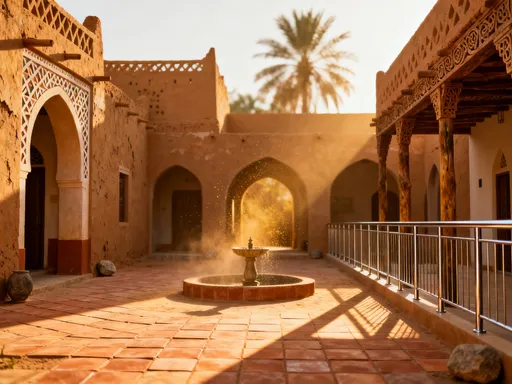
Traditional structures in Niamey often follow designs rooted in Hausa and Songhai cultures, two of the region’s dominant ethnic groups. These designs emphasize privacy, community, and harmony with nature. A typical compound features high outer walls enclosing a central courtyard, where families gather, cook, and socialize. Entrances are modest and often offset, ensuring that views into private spaces are blocked. Wooden beams, called toron, protrude from the walls—originally functional, serving as scaffolding for re-plastering, but now also decorative, forming rhythmic patterns across the façade.
Religious architecture in the city reflects the same principles. Mosques constructed from banco often feature conical minarets and tiered roofs, with minimal ornamentation, focusing instead on simplicity and spiritual focus. One notable example is the Grand Mosque of Niamey, whose design draws from Sudano-Sahelian traditions, using local materials while accommodating large congregations. Though not always open to non-Muslim visitors, its exterior offers a powerful visual statement about the continuity of Islamic architectural heritage in West Africa.
What makes these traditional buildings truly remarkable is their resilience and adaptability. Despite the challenges of seasonal rains and erosion, communities maintain them through seasonal re-plastering, often turning the process into a communal event. Women and children help prepare the mud mixture, while men apply it with wide trowels, smoothing the walls into soft, sculptural forms. This practice isn’t just about maintenance—it’s a cultural ritual that strengthens community bonds and keeps ancestral knowledge alive. For the observant traveler, these moments offer rare insight into how architecture and daily life are deeply intertwined.
Modern Meets Local: Contemporary Buildings with African Flair
While Niamey honors its architectural roots, it is not frozen in time. The city has seen a quiet evolution in recent decades, with new public and private buildings embracing innovation while staying grounded in local identity. Architects and planners are increasingly adopting climate-responsive design, using natural ventilation, shaded walkways, and locally sourced materials to create functional, sustainable spaces. This fusion of modernity and tradition is evident in several key structures across the city.
One standout example is the National Museum of Niger, housed in a building that blends geometric modernism with traditional motifs. Its angular façade incorporates patterns inspired by textile designs from the Zarma and Tuareg peoples, while courtyards and shaded verandas echo the layout of historic compounds. Inside, the museum preserves artifacts from Niger’s rich cultural history, but the architecture itself tells a story—of a nation proud of its past and shaping its future. Visitors often spend as much time admiring the building as they do the exhibits within.
Another notable project is the Centre Culturel Franco-Nigérien, a hub for arts and education that exemplifies thoughtful urban design. Constructed with a combination of concrete and banco, the center features vaulted ceilings, internal gardens, and open-air amphitheaters. Its design maximizes airflow, reducing the need for mechanical cooling, and its open layout encourages public engagement. Events, film screenings, and art exhibitions draw locals and expatriates alike, making it a living space rather than a static monument.
Government buildings, too, reflect this ethos. The Presidential Palace, while not accessible to tourists, showcases a restrained modern aesthetic with subtle nods to local craftsmanship—carved wooden screens, terracotta tiles, and shaded porticos that provide relief from the sun. These design choices signal a growing awareness that national identity can be expressed through architecture, not just in flags or anthems. For visitors, this means encountering a city that is both functional and symbolic, where even administrative structures feel connected to the cultural landscape.
Must-Visit Architectural Landmarks for Photography
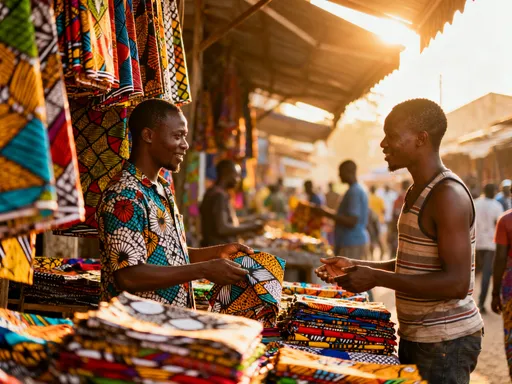
For photographers, Niamey offers a treasure trove of visual opportunities. The city’s architecture is inherently photogenic—textured walls, dramatic shadows, and rich earth tones create compelling compositions. One of the most iconic spots is the Marché de Niamey, particularly the older sections where vendor stalls are built from banco and topped with thatch or corrugated metal. Early morning light filters through the market’s canopies, casting golden hues on the mud walls and illuminating baskets of spices, textiles, and pottery. Capturing the interplay of light and texture here can yield images that feel both documentary and artistic.
Another must-visit site is the Parc National W, not for its wildlife—though it is a protected area—but for the visitor center’s architecture. Designed to blend into the surrounding savannah, the building uses low-profile forms, natural materials, and shaded terraces. Its integration with the landscape makes it a powerful example of eco-sensitive design. Photographers can capture wide-angle shots that show the structure nestled among acacia trees, or focus on details like hand-carved door frames and woven wall panels.
For those interested in religious architecture, the exterior of the Grand Mosque offers strong geometric lines and rhythmic patterns. The best time to photograph it is late afternoon, when the sun hits the mud-brick walls at a low angle, emphasizing their texture and warmth. It’s important to be respectful—avoid using drones, keep a modest distance, and never photograph during prayer times. A simple nod or greeting to nearby worshippers can go a long way in building goodwill.
Urban photographers will also appreciate the contrast found along Avenue Charles de Gaulle, one of the city’s main thoroughfares. Here, modern embassies with clean lines and reflective glass stand next to older homes with hand-painted façades and carved wooden shutters. A single block can offer a decade’s worth of architectural evolution. To avoid harsh midday light, plan shoots for the golden hours—shortly after sunrise or before sunset—when the city glows in soft, warm tones. Using a polarizing filter can help manage glare and enhance color saturation, especially on overcast days.
Hidden Courtyards and Local Neighborhoods: Where Authenticity Lives
Beyond the main roads and public buildings, Niamey’s true architectural soul lies in its residential neighborhoods. Areas like Hamdallaye, Goudiaby, and Plateau are home to some of the city’s most expressive and personalized homes. Unlike uniform housing developments, these neighborhoods feature a delightful variety of styles—each house a reflection of its owner’s taste, heritage, and resources. It’s not uncommon to see a home with a brightly painted door framed by intricate stucco work, or a courtyard wall decorated with symbolic motifs in relief.
Hamdallaye, in particular, has become known for its artistic flair. Many residents are craftspeople, educators, or civil servants who take pride in their homes’ appearance. Some hire local artisans to carve wooden lintels or mold decorative elements from wet clay. Others paint murals that depict scenes from daily life, proverbs, or even environmental messages. These personal touches transform ordinary houses into miniature galleries, where architecture becomes a form of storytelling.
Walking through these neighborhoods offers more than visual delight—it fosters connection. Residents are often curious but not intrusive, and a friendly smile or simple greeting in Hausa or French (“Salam alaikum” or “Bonjour”) can lead to warm interactions. Some may invite you to photograph their courtyard, especially if you show genuine interest. Always ask permission before entering private spaces, and consider bringing small gifts like school supplies or fabric as a gesture of appreciation.
These areas are also ideal for candid photography. Children playing near doorways, elders sitting in shaded corners, and women weaving baskets create natural, unposed moments. A 35mm or 50mm lens works well for capturing both environmental portraits and architectural details. The key is patience—spend time in one area, let people become accustomed to your presence, and shoot with respect. The resulting images will feel more authentic and meaningful than any staged composition.
Practical Tips for Travelers: Navigating Niamey with a Photographer’s Eye
Exploring Niamey requires thoughtful planning, especially for photographers seeking to capture its essence without disruption. The city is best navigated with a combination of local transportation and guided walks. Taxis are widely available and relatively inexpensive, though it’s wise to agree on a fare before starting your journey. For deeper access, hiring a local guide—especially one familiar with architecture or cultural heritage—can open doors that might otherwise remain closed. Guides can help arrange visits to private compounds, explain symbolic elements in design, and ensure cultural norms are respected.
Safety in Niamey is generally good for tourists, but standard precautions apply. Avoid carrying large amounts of cash or expensive gear openly. Keep your camera secure, and consider using a discreet bag rather than a professional-style camera backpack. The U.S. and several European embassies advise caution in certain border regions, but central Niamey is considered low-risk for visitors who follow basic guidelines. It’s also recommended to check current travel advisories before departure, as conditions can change.
Cultural etiquette is essential. Niger is a predominantly Muslim country, and modest dress is appreciated, especially in residential and religious areas. Women should wear loose-fitting clothing that covers shoulders and knees. When photographing people, always ask permission, particularly for portraits of women or elders. A simple gesture—holding up your camera and smiling—can be enough, but learning a few phrases in French or Hausa shows respect. Avoid photographing military or government installations, even from a distance.
The best time to visit Niamey is during the cooler dry season, from November to February, when temperatures are more comfortable and skies are clear. The harmattan wind, which brings dust from the Sahara, can affect visibility between December and February, but early mornings often offer crisp light. For photography, a lightweight mirrorless or DSLR camera with a range of lenses (24-70mm for versatility, 85mm for portraits) is ideal. A tripod can be useful for low-light shots, though it may attract attention in public spaces. Always carry extra batteries and memory cards—power outages are occasional, and charging opportunities may be limited.
Why Niamey Deserves a Spot on Your Travel Radar
Niamey may not have the fame of Marrakech, the bustle of Lagos, or the colonial charm of Dakar, but it possesses something rarer: quiet authenticity. Its architecture doesn’t shout for attention—it whispers stories of resilience, identity, and adaptation. From the sun-baked mud walls of traditional homes to the thoughtful design of modern public spaces, the city offers a visual narrative that is both humble and profound. For travelers seeking destinations that reward curiosity and patience, Niamey is a revelation.
More than just aesthetics, the city’s built environment reflects a deeper truth: that progress does not require erasing the past. Niamey shows how tradition and innovation can coexist, each enriching the other. Its buildings are not just shelters—they are expressions of culture, responses to climate, and acts of community. In a world where global cities increasingly look alike, Niamey stands apart, offering a vision of urban life rooted in place and purpose.
Responsible tourism can play a meaningful role here. By visiting, photographing, and sharing Niamey’s architectural beauty, travelers help raise awareness of its value. Supporting local guides, purchasing crafts, and staying in family-run guesthouses contribute directly to the community. Even small acts—like respecting private spaces or learning a few local words—can foster mutual understanding and appreciation.
Architecture, at its best, tells the story of a people. In Niamey, that story is still being written, one mud brick, one carved beam, one sunlit courtyard at a time. It’s a story of continuity and quiet pride, of a capital that thrives not through spectacle, but through sincerity. If you’re ready to see a side of Africa that few ever photograph, to walk streets where every wall has a voice, then Niamey awaits. Plan your visit. Bring your lens. And discover a city that proves beauty doesn’t need to be loud to be unforgettable.